
As we age, we tend to lose some facial fat volume, giving us a sunken, aged look. This will give the appearance of constantly being tired. This gradual deflation can make laugh lines, forehead lines, lines beside the mouth, and under-eye bags more noticeable. Instead of relying on pulling and lifting loose skin, the key to reversing these signs of aging is restoring lost fat to bring back a youthful, refreshed look.
Facial Fat transfer involves the harvesting, treatment, and transfer of fat from one area of the body to another. Fat is “harvested” or collected– generally by liposuction – from one area of the body, and placed in another area where there is a defect, deficiency, volume loss, or need for contour enhancement or adjustment. There are certain areas of the body that have better fat to harvest than others, and certain areas of the body where the fat transfer works better than others.
Facial Fat Transfer (fat grafting) Gallery
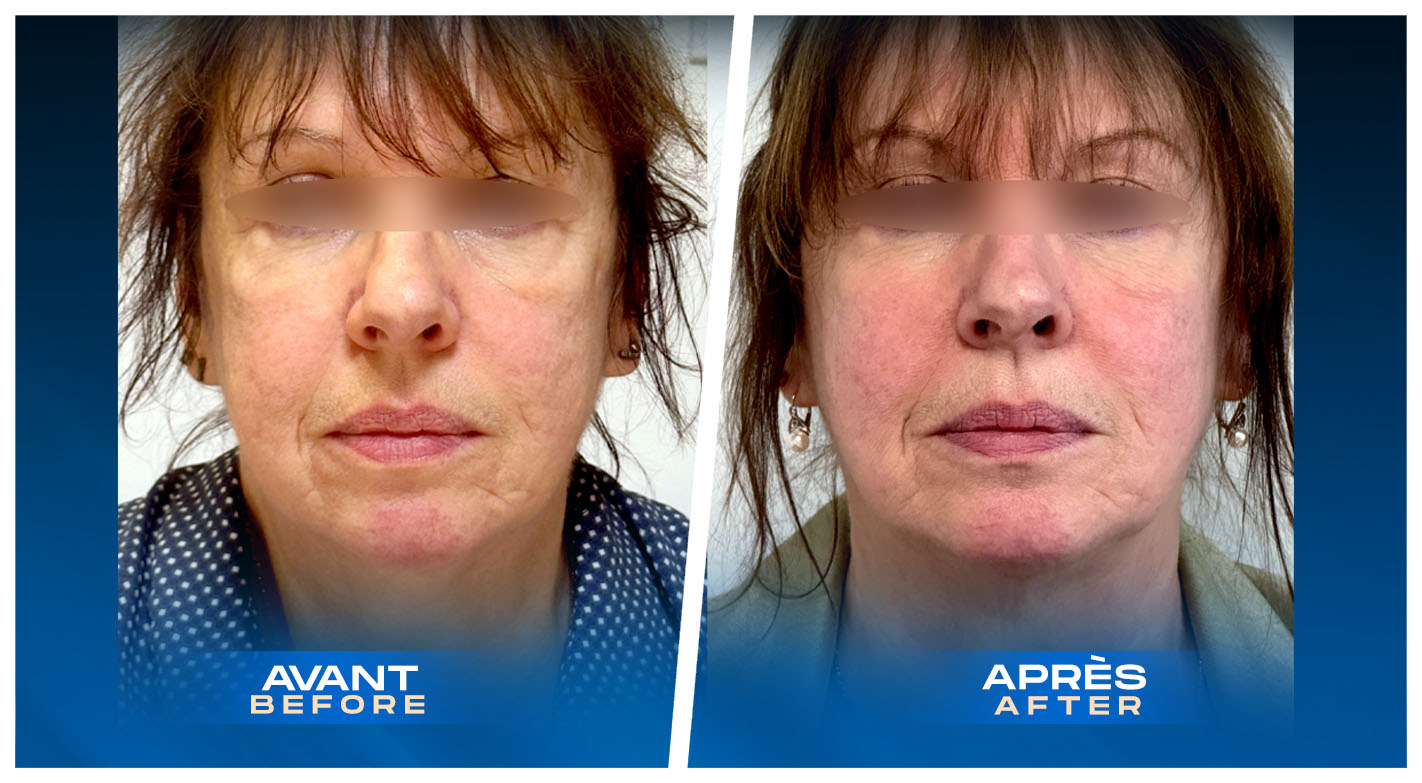
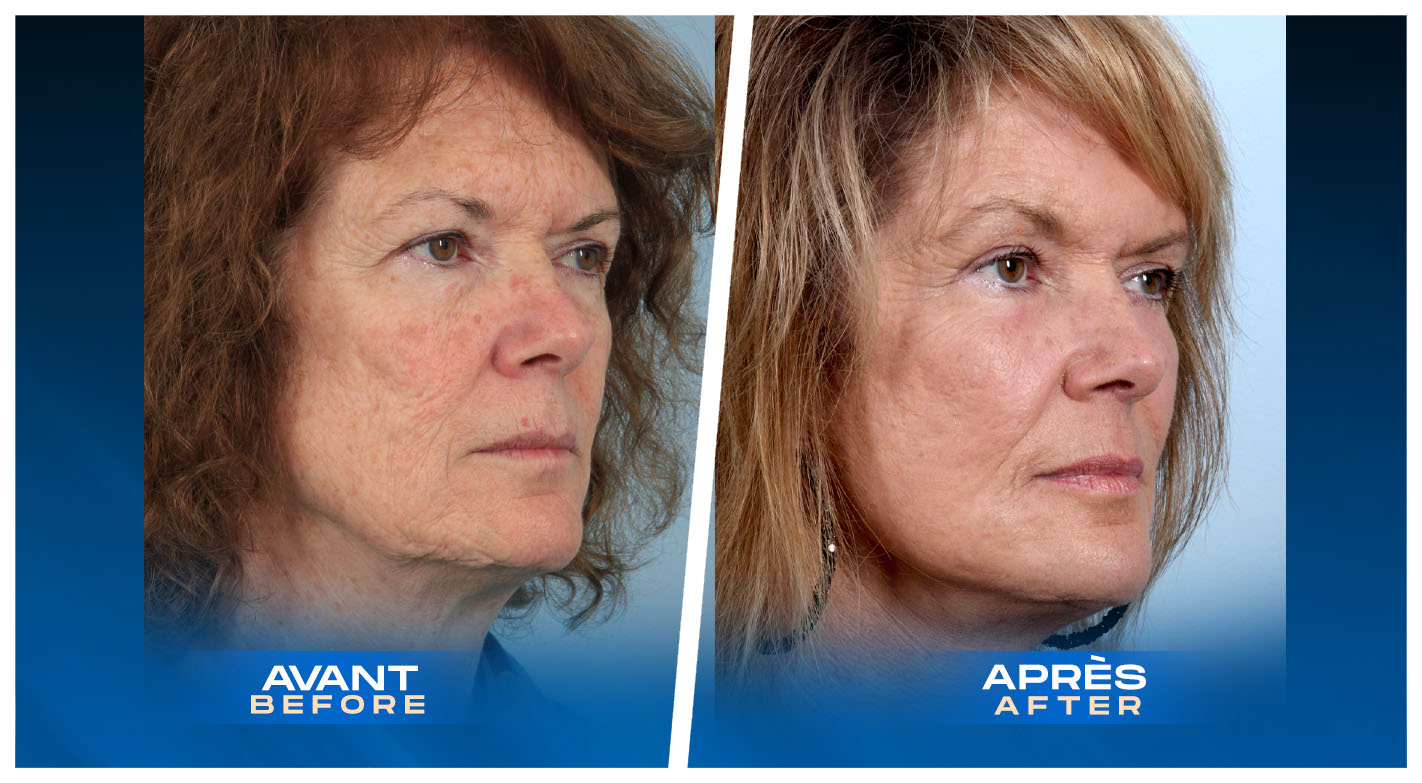
*Disclaimer: Keep in mind that each patient is unique and your results may vary. Photos in our online gallery are of actual patients of our practice who have provided consent to display their pictures online.
Facial Fat Transfer is an excellent option if you’re looking for a natural way to refresh your appearance. It helps restore the fullness to areas like your cheeks, lips, and under your eyes, giving you a youthful look. It will also help smooth out unwanted wrinkles and improve facial contouring.
The procedure begins with administering local anesthesia or intravenous sedation to ensure your comfort. Dr. Edouard Coeugniet will use liposuction to gently harvest excess fat from the predetermined donor areas. The harvested fat is then purified to remove any impurities, ensuring only healthy fat cells are used for the transfer. Using fine needles or cannulas, Dr. Edouard Coeugniet carefully injects the purified fat into the target areas in a precise manner. The fat injections help to achieve the desired volume and contour. The fat graft procedure can take a few hours, depending on the extent of the treatment.

Fat is gently removed from a donor site, such as the abdomen or thighs, using liposuction.
The harvested fat is purified to isolate healthy fat cells for transfer.
The purified fat is meticulously injected into the targeted facial areas for precise contouring.
Facial fillers can produce a beautiful effect on aging skin. While effective, the results fade with time, requiring retreatment. Facial fat transfer involves moving healthy fat cells to smooth a specific facial area. As the cells become viable and establish a blood supply in the new location, they may have a longer-lasting effect than dermal fillers.
Furthermore, facial fat transfer has the advantage of being entirely natural. As no synthetic material is involved, the body recognizes its own cells, meaning there is no risk of rejection.
A custom facial fat transfer can restore lost volume to the following facial areas:
Fat transfer (fat grafting) results are generally considered permanent, as the successfully transferred fat cells establish a new blood supply and become a lasting part of the new area.
Following the fat transfer procedure, a small percentage of the transferred fat cells will be re-absorbed by the body. Dr. Coeugniet takes this into account when deciding how much fat to harvest and transfer initially. After about 6 – 12 months, the postoperative swelling will have resolved and the remaining fat cells should have established a long-lasting blood supply, allowing them to survive in the long term. However, subsequent weight fluctuation can cause the fat cells to shrink or swell, just as they do in the rest of the body.
Furthermore, these fat cells may also be subject to the natural effects of aging. If patients begin to notice a decrease in volume several years after a fat transfer, a subsequent procedure can help to restore their initial results. For the vast majority of men and women, fat transfer offers a convenient, natural, and long-lasting alternative for turning back the clock without the need for more invasive cosmetic surgeries.
1. Using a cannula, fat is harvested (extracted) from the donor site, typically the lower tummy using the liposuction process.
2. The fat is then decanted and processed in a special centrifuge.
3. The fat is then injected into the desired facial area. The area where the fat is re-injected is called the recipient site.
When compared to injections of hyaluronic acid dermal fillers in the office, fat grafting offers multiple benefits. Fat grafting uses your own body tissues rather than synthetic foreign material. As a result, the grafted fat cells live on like the rest of your fat so the results are generally longer lasting than fillers. Importantly, grafted fat doesn’t block the lymphatic system of the face the way fillers can so the results tend to stay more consistent, without the “watery” edema that can often accompany hyaluronic acid fillers over time.
The ideal candidate for facial fat transfer typically has the following attributes:
A facial fat transfer procedure is typically performed with local anesthesia and topical anesthesia. General anesthesia may be used in some cases. As this allows you to be comfortable throughout the procedure. A board-certified anesthesiologist will monitor you during the surgery to ensure safety.
Healing after a lipo transfer can take three to seven days. After your fat transfer procedure, you will have two areas to monitor while healing. The first is the site where injections were made for facial and body sculpting. Avoid putting pressure on this area so the fat cells can settle into the tissues. Any disturbance to this area may affect your fat grafting results. The site where liposuction was performed is another area to monitor during your fat transfer recovery. Incisions from fat relocation surgery are small enough to heal without sutures.
To ensure the most satisfactory results, it’s important that you don’t lose weight during your first six months post-op. In other words, you need to consume as many calories as your body needs to maintain its current weight. If you’ve been maintaining your weight for at least six months, you can probably eat intuitively and not worry about tracking macros. If, however, your body fat percentage fluctuates periodically, you will need to track the macros you consume.
Yes! Fat transfer can be combined with many other cosmetic procedures. Typically, fat transfer can be done alongside a facelift, neck lift, eyelid lift, and more. During your consultation, Dr. Edouard Coeugniet will build a custom treatment plan that ensures you meet all your needs.
Recovery from fat transfer procedures typically involves some swelling, mild bruising, and discomfort
in both the donor and treatment areas. These side effects usually subside within one to three weeks.
Dr. Edouard Coeugniet will provide detailed post-operative care instructions to help you manage any discomfort
and ensure optimal results. Most patients return to their normal activities within a week or two.
The results of fat grafting are long-lasting, with many patients enjoying their enhanced appearance for years to come.
To maintain your results after fat transfer, you’ll want to keep your weight stable, avoid smoking and excess alcohol use, avoid excess sun exposure, and stick to a healthy diet and exercise regimen. After your procedure, Dr. Edouard Coeugniet will walk you through the best ways to maintain your results.

Getting a procedure is a tremendous personal investment. However, it is not a decision that should be made lightly or in a hurry. Rushing might influence you to choose the wrong shape or go too big, which may impair you from running, jumping, or performing certain physical activities with ease. Go too small, and you may feel underwhelmed with your new look.
“ If you want to take the next step and learn more about your options, contact us online or call us. Dr. Edouard Coeugniet will help you determine whether treatment is right for you and, if so, which solution best suits your needs. ”


4.9/5 Stars | Google Reviews
© Copyright 2026 | Dr. Edouard Coeugniet Plastic Surgery. | All rights reserved.

